Skip to content
DATANOMIQ

Use Cases

Examples from practice

Projects from industry, logistics and retail – each with situation, solution and impact. The examples come from our team's project experience and are anonymised.

Situation

Less buffer, more pressure

What many companies are feeling right now:

  • Capital tied up in inventory is getting more expensive
  • Supply chains remain volatile – planning is nervous
  • Customers still expect short delivery times
  • Efficiency programmes hit their limits without a fact base
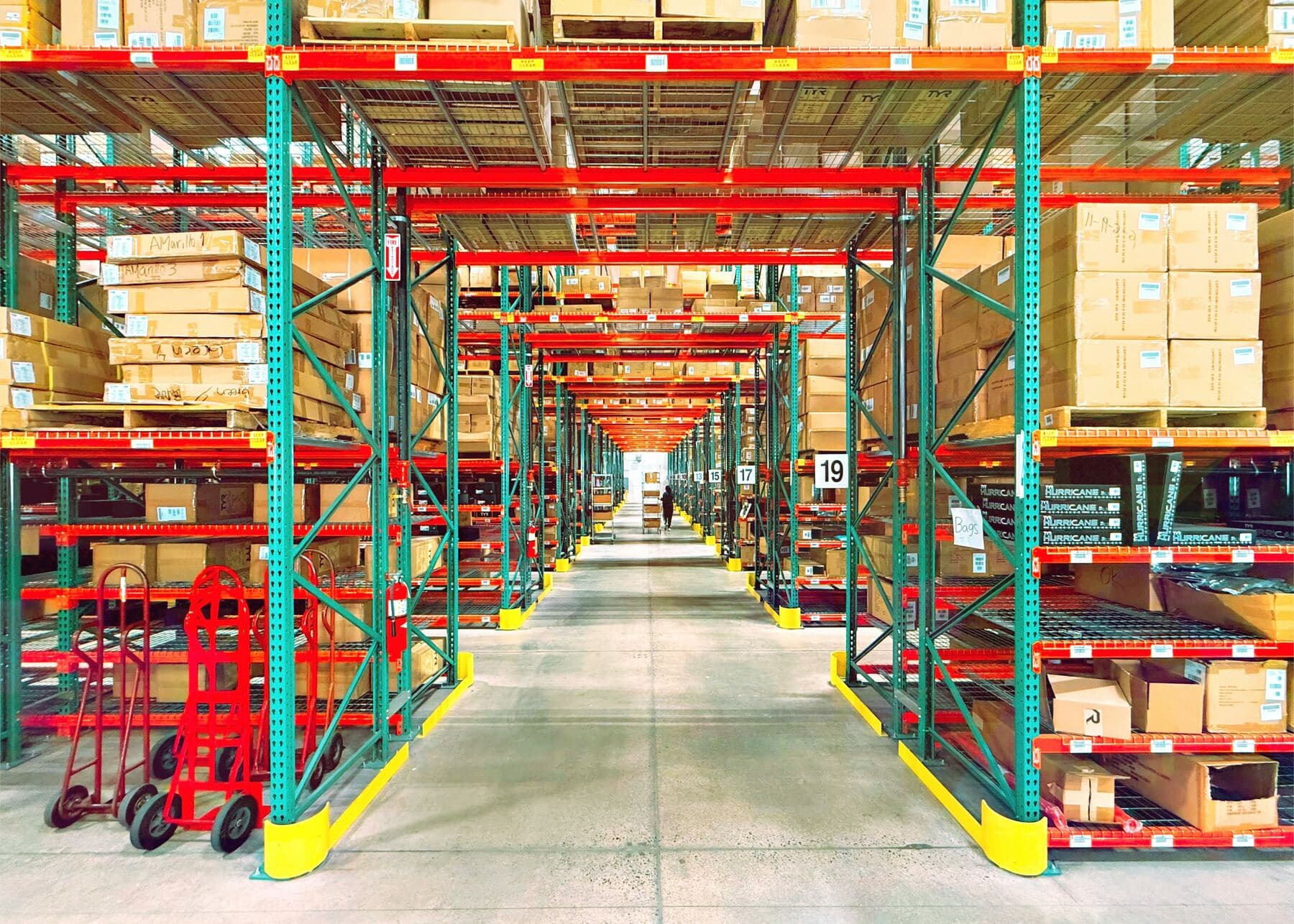
High-bay warehouse with pallets in long rows of racks
Inventory becomes a risk
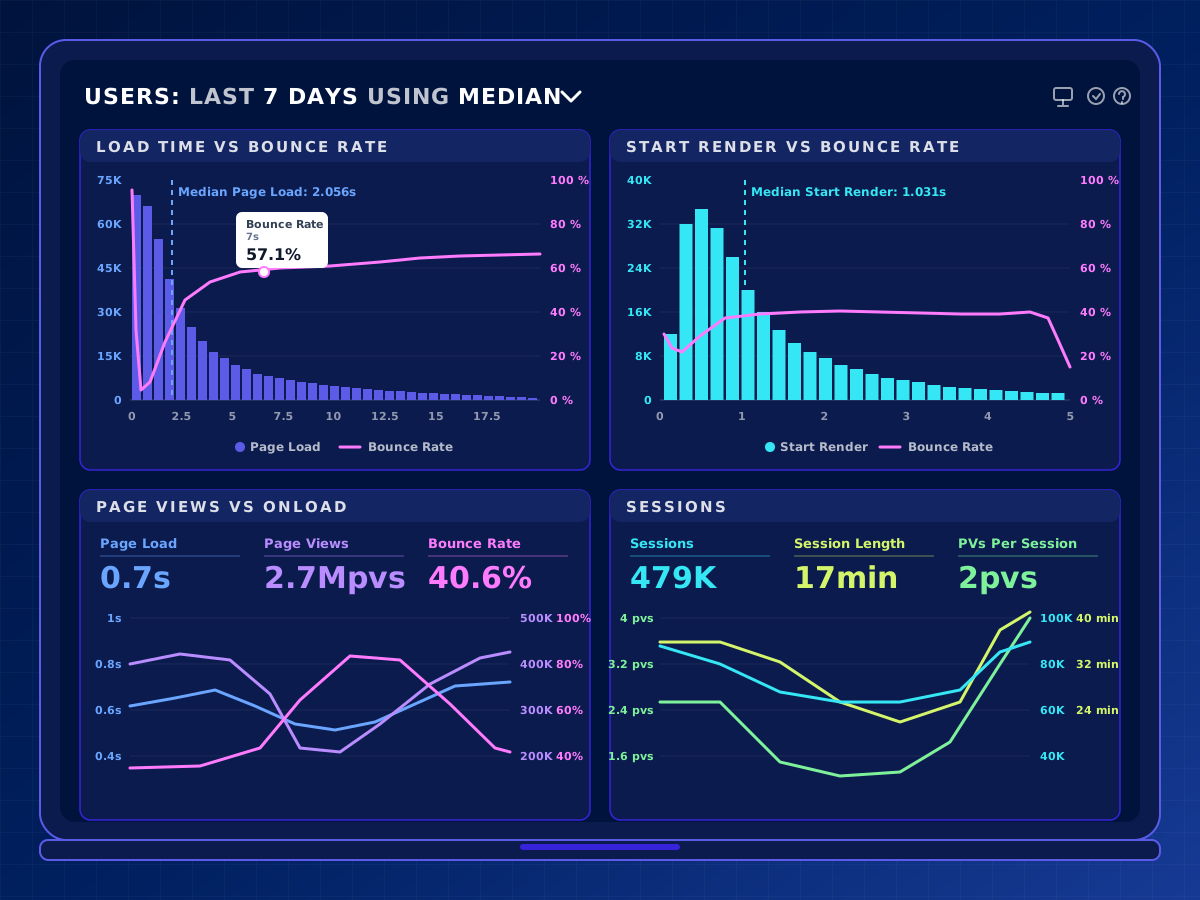
Illustration of a KPI cockpit on a laptop: users of the last 7 days using median with load time vs bounce rate, start render vs bounce rate, page views (0.7 s, 2.7M page views, 40.6% bounce rate) and sessions (479K, 17 min, 2 page views per session)
KPI cockpit – daily in the shop floor meeting

Data transparency

From gut feeling to facts

Without reliable data, typical lean questions remain open:

  1. Where do waiting times occur?

    As-is process instead of PowerPoint process.

  2. How much WIP is really in circulation?

    Detect bottlenecks, rework and loops.

  3. Which measure works?

    Before and after – but measurable.

Six use cases

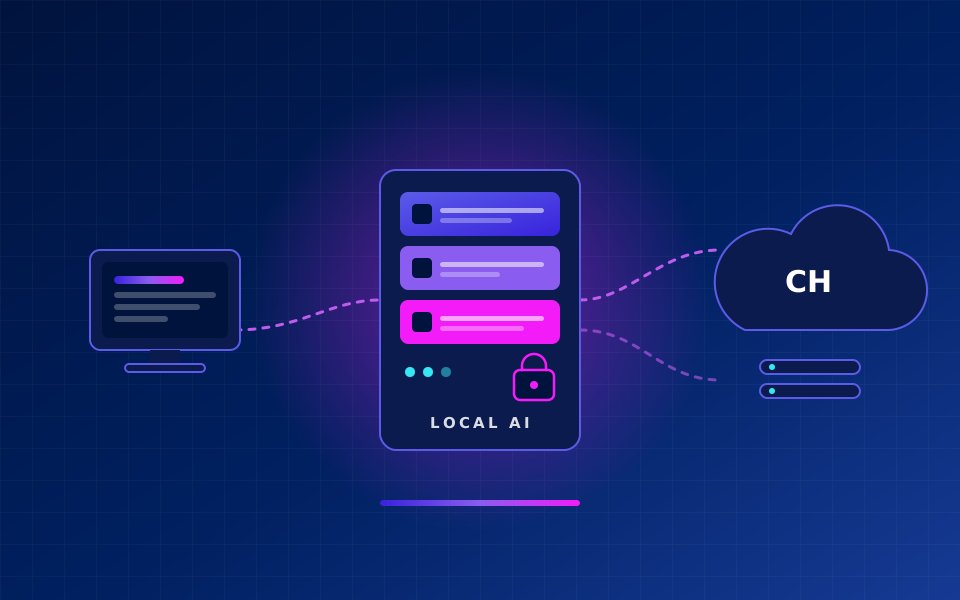
Illustration: workstation, local AI server with accelerator cards and lock symbol, and a data centre in Switzerland, connected as a hybrid setup

Local AI / AI as a Service

Local AI in the company for SMEs

Situation
Small and medium-sized enterprises want to use AI for knowledge bots, document analysis or assistant systems – but sensitive customer, production and contract data must not leave the company. Cloud APIs bring running costs per request, dependence on a single vendor and open questions about data protection.
Solution
We set up a company-owned, locally hosted AI: on hardware from Apple, Nvidia or AMD, from a powerful workstation to your own server rack. Even very large language models run this way inside the company. DATANOMIQ supports the setup of the environment, the fine-tuning of models on your terminology and documents, and the creation of model ensembles in which several specialised models work together. If you prefer not to operate hardware, the models are hosted in a data centre in Switzerland – or both are combined in a hybrid approach.
Impact
The company runs its own AI use cases with full data sovereignty and predictable costs – and can offer AI functions as AI as a Service, internally for departments or externally for customers. Independent of individual vendors, scalable from the first pilot to regular operation.
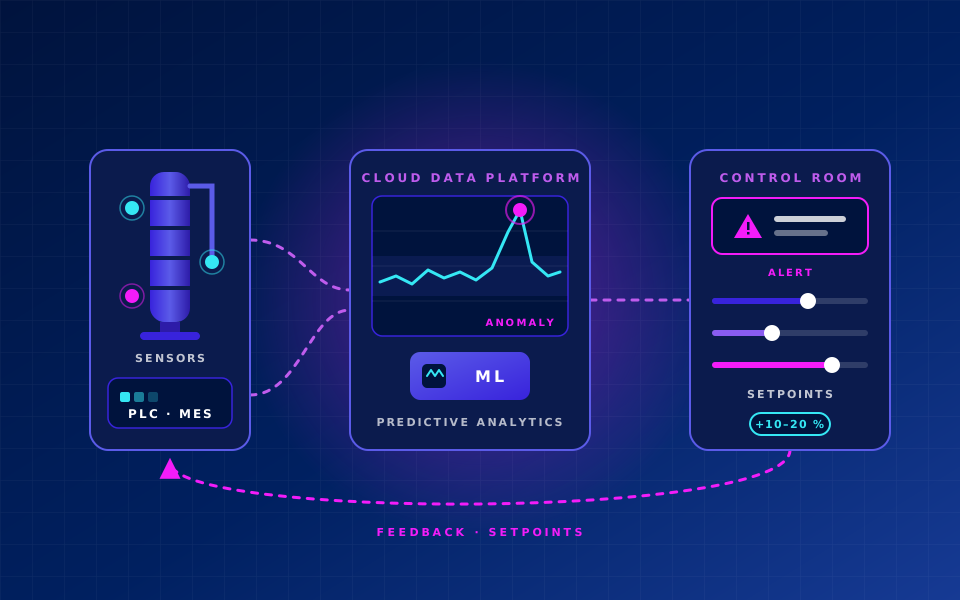
Illustration: sensors on a chemical plant and PLC/MES data flow into a cloud data platform where machine learning detects an anomaly in the sensor curve; alerts and setpoints go to the control room and back to the plant as feedback

Data Science / Machine Sensor Analytics

Detecting anomalies in chemical production: machine sensor data analysed with machine learning

Situation
A global chemical manufacturer faced inefficiencies due to non-transparent production data and increasing process requirements. Sensor, control and order data existed, but it was spread across plants, the control system and the ERP and was never analysed together.
Solution
We consolidated the plants' sensor data together with control and MES data in a cloud data platform and analysed it with machine learning: predictive analytics detects process anomalies before they lead to scrap or downtime and derives optimised machine settings. The results flow back to the control room and plant operators as setpoints and alerts – closing the data loop from the field level to the cloud.
Impact
Plant efficiency increased by 10 to 20%. On top of that: lower costs, higher production volume and improved energy and quality management.
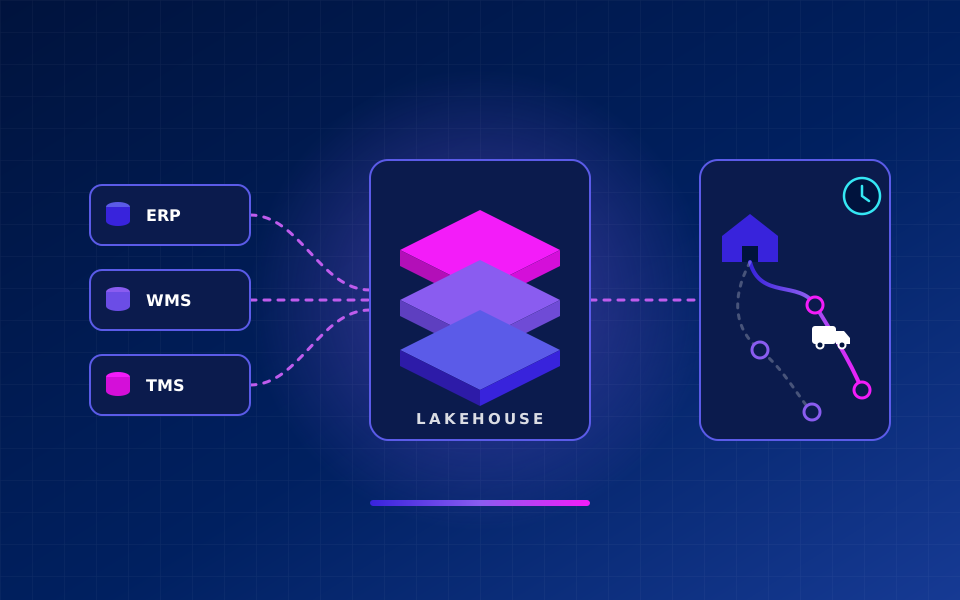
Illustration: source systems ERP, WMS and TMS flow into a three-layer data lakehouse, which drives optimised delivery routes from the warehouse to customers

Data Platform / Logistics & Supply Chain

Supply chain for retail: a data lakehouse as the single source of truth for stock, routes and delivery times

Situation
A retailer with several warehouse locations and its own delivery fleet lacked a unified view of stock, orders, routes and suppliers. The data was spread across ERP, warehouse management, transport planning and shop systems; dispatching and route planning ran on manually maintained spreadsheets. The result: supply shortages, empty runs and unreliable delivery times.
Solution
We built a central data lakehouse on a cloud data platform and consolidated all internal and external data – ERP, warehouse management, transport planning, shop and marketplace interfaces, supplier data – in structured layers. On this basis run demand forecasts, route optimisation for picking and delivery tours, and a real-time reconciliation of stock, vehicles and staff. Dispatchers see bottlenecks before they arise.
Impact
Up to 30% cost savings and 40% time savings through route optimisation and better coordination between resources. As a result: fewer supply shortages, more reliable delivery times and one consistent data basis for reports and decisions across the company.
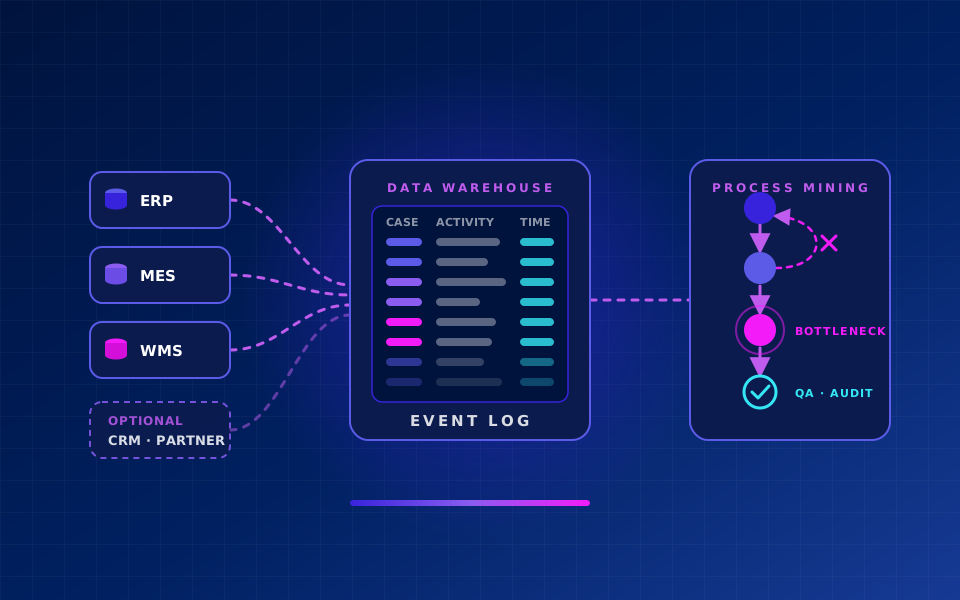
Illustration: ERP, MES and WMS plus optional CRM and partner data feed a data warehouse with an event log; the resulting process graph shows an eliminated loop, a detected bottleneck and a verified quality inspection step

Data & Process Transparency

Optimisation potential in manufacturing logistics identified with process mining

Situation
For a mid-sized mechanical engineering company, production lead times are critical: customers choose primarily by the shortest delivery times. The processes ran across purchasing, manufacturing, assembly, quality inspection and logistics – where time was being lost could not be seen in the standard reports.
Solution
We built a purpose-developed data warehouse that generates an event log from ERP, MES and WMS – optionally extended with data from the CRM and from external systems such as logistics partners and suppliers. These event logs are far more granular than is common in business intelligence: every order, every operation and every handover is captured with a timestamp. On this basis, process mining runs as continuous process monitoring and analyses the manufacturing and assembly processes together with purchasing and logistics.
Impact
Unnecessary process loops were eliminated and bottlenecks identified; additional operations and waiting times were resolved in around 50% of cases. In quality inspection in particular, the processes also became more transparent – and thus audit-proof.
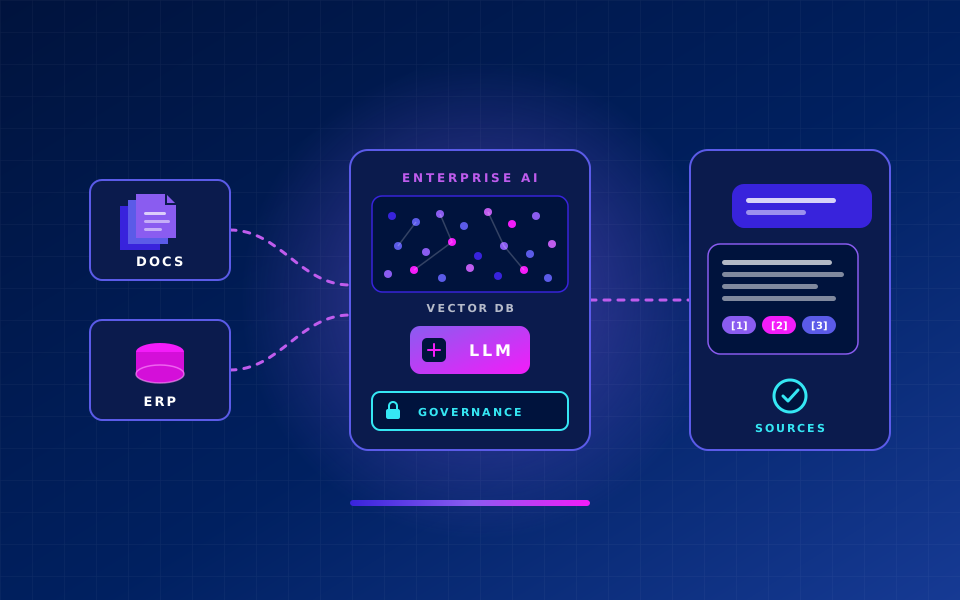
Illustration: documents and ERP data flow into an enterprise AI with vector database, large language model and governance layer; on the right an answer with source references

Enterprise AI / Knowledge Bot

Knowledge bot for industry and steel production: an LLM with access to ERP and document data

Situation
A large industrial and steel production company works with a large number of documents – requirement documents, specifications, purchasing and sales records – spread across file shares, document management and the ERP. With staff turnover, knowledge was lost; searching for comparable cases and checking new documents against existing ones tied up a lot of engineers' and managers' time.
Solution
We built a multi-layered enterprise AI: documents and ERP data are vectorised and stored in a knowledge base; a large language model answers questions and compares documents on this basis – always citing its sources. A data access and governance layer ensures that the permissions of the source systems apply and that every answer remains traceable. The model ran on Microsoft cloud infrastructure (IaaS); alternatively, the same architecture can be operated with locally hosted models (see the use case “Local AI in the company for SMEs”).
Impact
Managers and engineers compare new documents with earlier versions 75% faster, create drafts from keywords provided by the business units and find knowledge even when the responsible person has left the company or moved to another department.
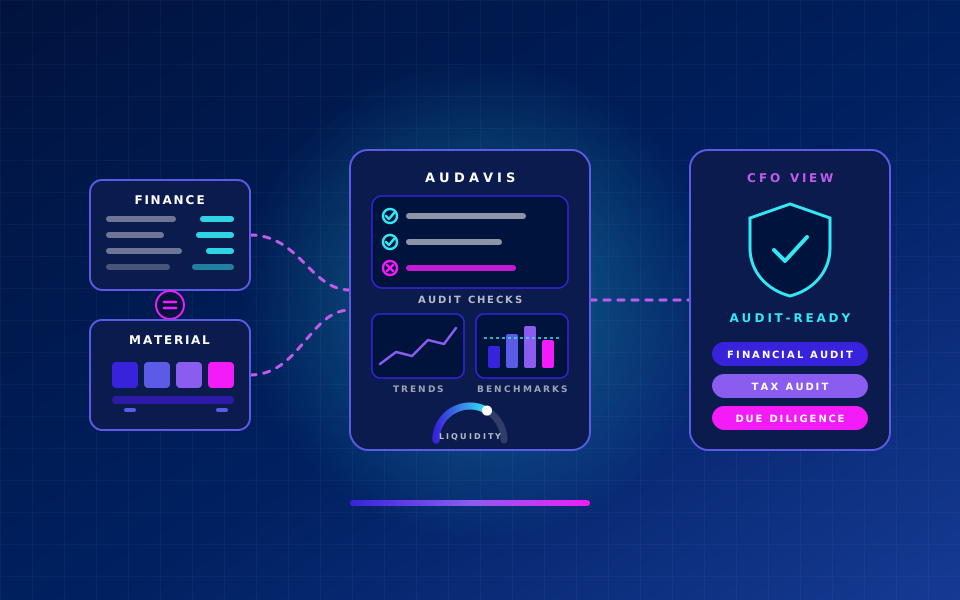
Illustration: financial postings and material movements are reconciled and analysed in AUDAVIS with audit checks, trend analyses, benchmarks and liquidity KPIs; on the right the CFO view with audit-ready status for financial audit, tax audit and due diligence

CFO Advisory / Financial Data Quality

Digital CFO advisory: audit readiness and financial data quality in real time

Situation
From the perspective of the CFO and controlling, the quality of financial data worries many companies: postings from several systems, manual corrections and late closings leave it open whether the figures will stand up to a financial audit, a tax audit or a due diligence. Data transparency usually only emerges once the auditors are already on site.
Solution
DATANOMIQ relies on AUDAVIS, a software also founded by Benjamin Aunkofer and developed together with auditors. AUDAVIS gives auditors and CFOs a real-time overview of financial data and establishes audit readiness proactively – for financial audits, tax audits and due diligence. In addition to standard audit procedures, it includes trend analyses, benchmarks, liquidity KPIs and the reconciliation of financial and material movements. DATANOMIQ handles the connection to ERP and accounting, the data preparation and the interpretation of the results together with the CFO team.
Impact
Financial data quality becomes continuously measurable instead of being checked once a year: anomalies are detected before they turn into audit findings, closings and audits run faster, and CFO and controlling decide on a transparent, audit-proof data basis.

Which use case fits you?

Describe your situation – we will show you which data foundation, which model and which first step make sense.